
Upper Merion Township Resident Lookup Records
An Upper Merion Township resident lookup has no single master list. Start with the record that matches the question. A parcel card links an address to a recorded owner and mailing line. A deed records parties and legal description. A public court docket records a case role. A voter channel has its own statutory access rules. Historical vital material can help establish a family connection, while business and licensing systems have narrow affiliation roles. Each source needs an independent match before it supports identity.
| Record layer | What it can confirm | Custodian or route | Key limit |
|---|---|---|---|
| Address and parcel card | Recorded owner, situs, mailing clue, assessment, and displayed sale placement | Montgomery County Property Records | Address or parcel first; owner-name search is disabled |
| Recorded document | Parties, date, legal description, deed, mortgage, plan, or power record | Recorder of Deeds | Name-indexed; account, copy, counter, and mail routes differ |
| Voter record or list | Limited registration, status, party, district, and participation fields by product | PA Department of State / Voter Services | Individual check or authorized request only |
| Public court docket | Party, court, number, status, event, and public entry | UJS Case Search / county custodian | Some categories are not publicly displayed |
| Vital, probate, or marriage record | Historical family, estate-party, or marriage-license fact | DOH, PHMC, Archives, or Register of Wills | Age and eligibility rules control access |
| License or entity filing | Exact credential or entity affiliation | PALS / Department of State | Not an address or household index |
Use an address only when one is already known. Montgomery County Property Records accepts street-address and parcel-number searches, not an owner-name starting search. The parcel card separates the physical property location from the owner mailing address. It can establish a link to land, but it does not identify every person at that address. For a named street or a full address chain, use the Upper Merion Township by-street records route.
Search Upper Merion Township UJS Records
Pennsylvania UJS Case Search is the free statewide public docket route for relevant Montgomery County Court of Common Pleas and Magisterial District Court matters. Begin with Participant Last Name and First Name, then select Montgomery County if narrowing is needed. A date range, case category, status, or court office can help separate same-name results. Use the fewest terms that safely narrow the result. An exact docket number is stronger than a name match when it is available.
| Participant Last Name / First Name | Name-search fields; retain middle initials, suffixes, and historic spellings when shown. |
|---|---|
| County | Choose Montgomery to narrow an Upper Merion search. |
| Docket Number | Conditional identifier; Magisterial examples begin MJ and Common Pleas examples begin CP. |
| Date Filed | Optional start and end dates in mm/dd/yyyy form. |
| Docket Type / Category / Status | Optional filters that distinguish a public case result. |
| Scheduled Events Only | Optional filter for future hearings, trials, arraignments, or conferences. |
The Pennsylvania UJS Case Search is the source for this public court-search interface.
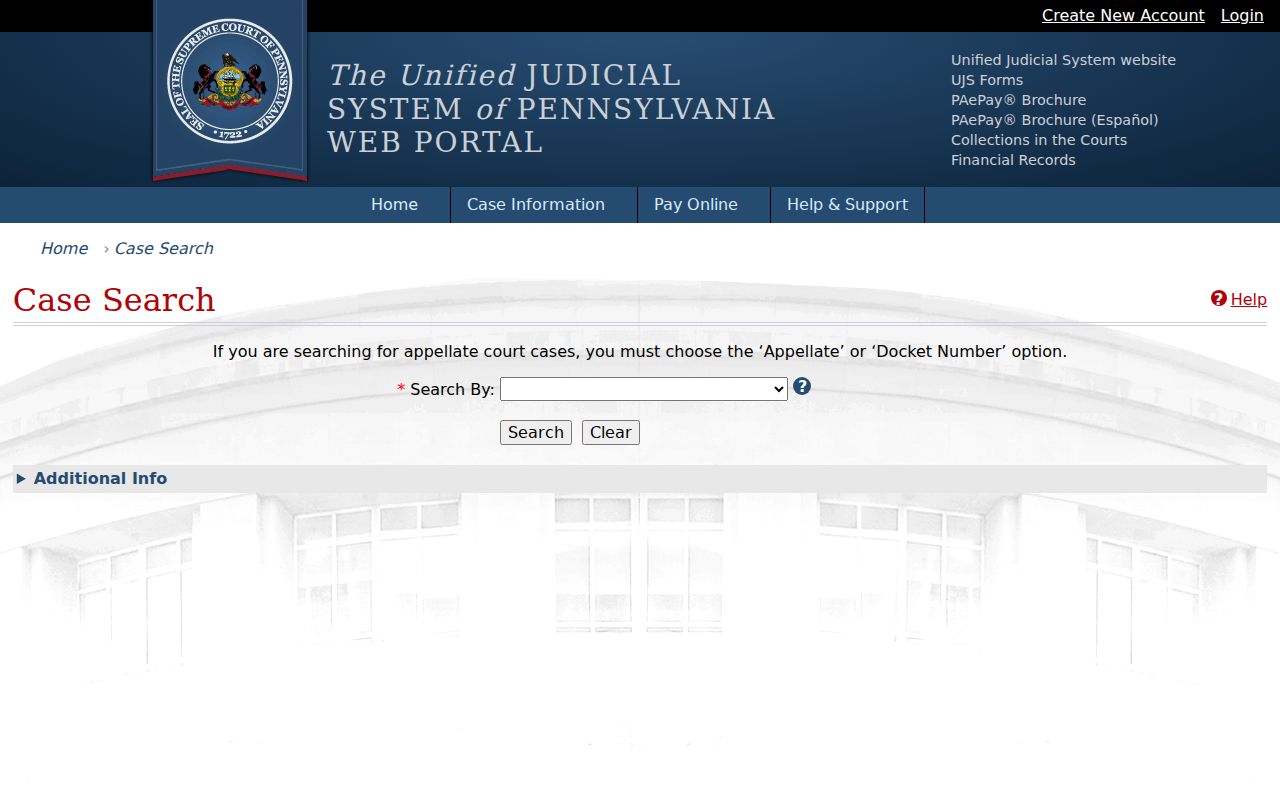
A public result can organize a docket number, court and county or office, case type or status, participant names and roles, filing dates, scheduled events, public charges or entries, and docket-sheet information. It is a public docket, not a complete personal history.
When the web docket is not enough, use the county custodian that holds the particular file. Montgomery County directs criminal record seekers to UJS and identifies the Clerk of Courts as the certified-copy route. Civil material may sit with the Prothonotary, while probate and marriage functions belong with the Register of Wills and Clerk of Orphans’ Court. A request for a certified document should name the docket number, case type, court, and date range. That is more useful to a records office than a broad request for information about a person.
Verify an Upper Merion Township Resident Match
Same-name results need a second record that answers a different question. Match the name as displayed, including a middle initial, suffix, maiden name, or historic variant. Then compare date and place. A parcel sale can be tested against the Recorder book and page. A historical directory household can be tested against the nearest released census or a public-aged death index. A UJS participant can be tested against the docket number, court, and filing date. Do not treat a shared King of Prussia mailing label as identity proof.
- Write down the name exactly as the first official result presents it, along with its date, source, and any unique number.
- Where an address or parcel is known, record the property location, mailing line, current recorded owner, last-sale date, and deed book or page from the property card.
- Use the deed book or page and legal description to test the Recorder record, rather than relying only on a changing street number.
- Search UJS by participant name and Montgomery County, then compare the public case number, court, event date, and role.
- If a document must be official, request it from the appropriate Clerk, Prothonotary, Register of Wills, Recorder, or vital-record custodian.
- Docket
- The court’s running case record, which identifies the case and lists public filings, events, and entries.
- Index versus image
- An index points to a record and its basic fields. An image is the reproduced document. Web access to each can differ by custodian and record type.
- Certified copy
- A copy issued or authenticated by the custodian for an official purpose. A web printout is not automatically certified.
If two sources conflict, keep both citations and report the date or field difference to the custodian. Choosing the more convenient match can join records belonging to different people.
Confirm Upper Merion Township Vital Records
Vital records have a different route from property or court records. Pennsylvania’s Division of Vital Records holds statewide birth and death events from 1906 forward and does not permit public self-searches. Birth certificates become public in January after the 105th year, and death certificates in January after the 50th year; public archival copies are noncertified. For events before 1906, Montgomery County Archives has local birth and death material, but county sources describe different historical ranges. Request the exact register and year rather than assuming complete coverage.
Marriage licenses belong with the Montgomery County Register of Wills. The county states that marriage records after 1989 have public online search access and that records may be viewed; certified copies follow the county’s request or in-person process. Divorce records are court files. The County Archives directs researchers to the Prothonotary for divorce records after 1970. Older-family research can also use the documented 1915 booklet and 1934–2013 yearbook collection through the Upper Merion Township city directories research path.
Check Upper Merion Township Voter Records
Pennsylvania’s official Check My Voter Registration tool is an individual status service, not a name-browse or street-browse directory. A registrant can use the online tool, Montgomery County Voter Services, or the state phone route. The name should be entered exactly as it appears in the registration. For a permitted public record list, use the formal state or county request channel, provide identification and a signed use affirmation, and follow the stated delivery limits.
The State form distinguishes a Public Information List, Street List, Walking List, and Full Voter Export. The available fields vary by product. Participation history states whether and when someone participated, never ballot choices. The form bars Internet publication and restricts improper uses. An inactive status does not by itself remove voting eligibility, and an older street list is a dated civic record rather than proof of a current address. Address Confidentiality Program participants may lawfully use a substitute address.
Compare Upper Merion Township Record Roles
A professional credential or an entity filing can corroborate a narrow affiliation, but neither replaces a resident lookup. Pennsylvania’s Business Entity Search begins with an exact entity name or number. It does not index businesses by officer or owner name, business address, tax identifier, purpose, or type. Its results can identify an entity or filing and, when available, listed filing parties. PALS can verify license status or board discipline for an exact person or facility, but it is not a current-address directory.
Most domestic and foreign associations began annual reports in 2025. Those reports can provide current entity-office and governance fields, but they remain corporate filings. The state’s unclaimed-property portal is another name-based lead that requires claimant documentation and does not confirm identity or present residence. Keep every result within the purpose of its own index.
Use Upper Merion Township Resident Lookup Custodians
When an online return ends, contact the office that owns the specific record. Assessment and the Recorder handle parcel and land-document questions. The Clerk, Prothonotary, or Register of Wills handles the appropriate court, civil, probate, or marriage material. Voter Services is the list custodian. The Department of Health handles current vital eligibility, while County Archives, HSMC, and the library provide historical alternatives. Bring a parcel ID, docket number, certificate number, document date, or directory citation whenever possible.
For an identified Township permit, inspection, planning, or administrative file, use the Upper Merion Right-to-Know request route. The Township accepts online, mail, fax, and in-person filing. A request should name the existing record, property address, format, and time period. The Pennsylvania Right-to-Know Law normally requires a response within five business days, with a written extension route under the statute. It does not require an agency to compile a new person profile or release a confidential record.
A correction also starts with the custodian. Keep the result date and the field that appears wrong, then ask the relevant office about its correction process. A change request to an unrelated publisher cannot alter a county parcel card, court docket, voter record, or vital certificate.
Upper Merion Township Resident Lookup Limits
No result is a finding in itself. UJS may omit juvenile, sealed, expunged, limited-access, destroyed, delayed, or certain civil records. Property data does not list renters, adult household members, utility customers, or vehicle registrants. Court, voter, vital, Recorder, and municipal files each have a separate correction path. The Pennsylvania Right-to-Know Law can request existing agency records but does not override confidential vital records, protected addresses, sealed court material, or source-specific restrictions.
The Pennsylvania State Police Megan’s Law website is a limited public-protection registry, not a general identity or resident-search tool.
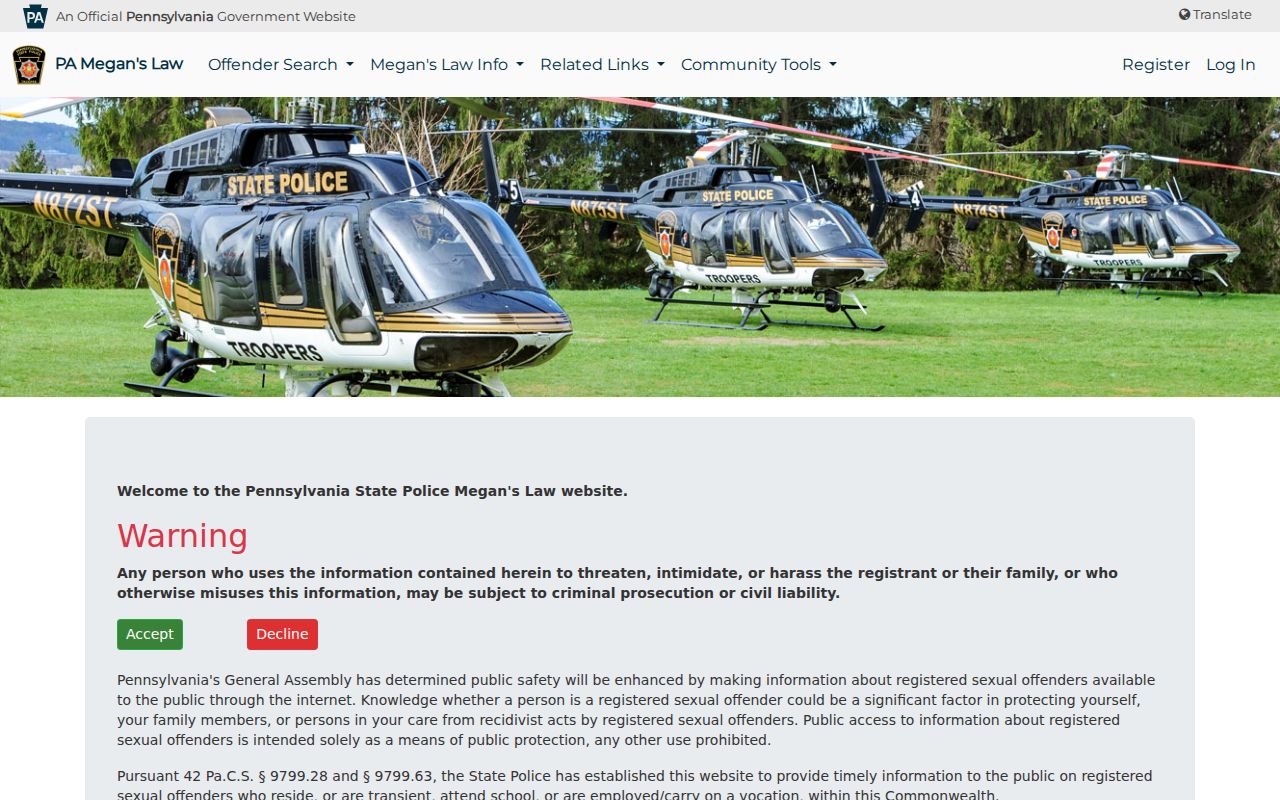
The registry offers specified public information and warns that data may be incomplete or outdated. It cannot positively identify someone without fingerprint comparison. Use it only for its stated public-protection purpose and direct an apparent error to the Megan’s Law Section.
Lawful personal research. Use public records to verify a documented question, not to threaten, stalk, harass, intimidate, or harm anyone. Pennsylvania law protects addresses and personal identifiers in specific records, including records associated with qualifying Address Confidentiality Program participants.
ACP provides qualifying survivors with a substitute mailing address for listed records and is part of a safety plan. A correction request belongs with the office that maintains the field: Voter Services, court clerk, Department of Health, Assessment, Recorder, or the relevant municipal custodian. Identify the document or field, preserve the source date, and ask that custodian about the applicable process.